


Use A Fall Walkthrough To Build A Useful Repair List
Fall is a practical time for Windsor homeowners to review exterior maintenance and unresolved repair concerns. The goal is not to predict every hidden problem or take the house apart. It is to notice changes, document recurring trouble spots, and decide what deserves professional attention before a small concern becomes another season's unfinished task.
Start with the areas you use most: entry doors, patio access, exterior trim, and deck stairs. Then review the places connected to past leaks or repeated paint failure. A short, organized list is more useful than a collection of close-up photographs without context.
Rising Starr Construction provides dry rot repair, remodeling, decks, and other residential construction services in Windsor and Sonoma County, with service in Marin and Napa counties. This checklist helps you prepare a focused repair conversation while keeping ordinary observation separate from work that needs a qualified professional.
Start With Last Year's Unresolved Items
Before walking outside, review old photographs, inspection notes, and repair invoices. Was there a window stain you meant to revisit? Did a contractor recommend assessing a deck component? Was a gutter problem corrected, but the damaged wood below it never evaluated?
Write down what was done and what remains uncertain. A record that says “gutter adjusted in spring; fascia condition not assessed” gives a contractor a useful starting point. It avoids assuming that correction of one issue also completed every related repair.
If you recently bought the home, keep the inspection report available and identify the items you want discussed. Our inspection repair planning guide explains how to connect reported locations with a construction scope. You can use the same organization even when no sale is currently involved.
Make A Safe Ground-Level Circuit
Walk accessible paths around the home and look for visible changes. Note peeling finishes, deteriorated board edges, separated trim, staining, and areas where water seems to linger. Take a wide photograph first, then a closer image from the same safe location.
Avoid climbing onto roofs, placing ladders on uncertain surfaces, or entering questionable crawlspaces to complete a maintenance checklist. If you cannot see an area adequately, mark it as needing professional access. That is useful information, not an incomplete inspection you need to finish yourself.
Use a consistent location description for each item, such as “rear patio door, left lower corner.” The description should still make sense to someone who was not standing beside you. Clear location notes make a repair visit more efficient and help distinguish similar-looking concerns around the property.
Review Gutters And Roof-Edge Clues From Below
Look for signs of past overflow, staining below the roof edge, loose-looking components, or visible deterioration in fascia and nearby trim. These observations can suggest where closer assessment is needed, but they do not establish the condition of the roof or concealed materials.
If cleaning or elevated work is needed, arrange appropriate professional help. Ask the relevant contractor to explain whether the issue involves maintenance, a damaged component, or a construction repair. Those may be separate scopes involving different trades.
For wood concerns at the roof edge, our siding, fascia, and trim repair guide explains the questions to ask. Keep both the visible damage and the possible related exposure in the conversation so the final proposal does not address only the appearance of the board.
Look At What Happens During Irrigation
If it is safe and convenient to observe a normal irrigation cycle, note whether water reaches siding, trim, doors, or deck components. Do not assume that dry-season weather means exterior wood has no moisture exposure. Record the locations and discuss corrections with the appropriate irrigation or landscape professional.
University of California termite prevention guidance recommends addressing leaks and exterior defects and identifies moisture-related conditions as relevant to wood damage. For a homeowner's checklist, the useful action is to notice recurring exposure and arrange the right assessment.
Avoid making unplanned drainage or grading changes against the house. Site conditions matter, and moving water away from one spot can affect another. The repair and maintenance plan should be based on the actual property rather than a generic instruction to redirect everything in one direction.
Review Exterior Doors And Windows
Check how the openings function during normal use. Look for deteriorated trim, recurring paint failure, stains below a sill, or a threshold that appears damaged. Note whether a problem changes after rain, irrigation, or use of the door.
A sticking door or stained window corner can have several causes. Record the symptom without deciding that every affected product must be replaced. Ask a contractor to distinguish the condition of the window or door from the surrounding trim and framing.
Our window and door repair article explains how those scopes connect. If replacement is being considered, coordinate window and door services with any necessary wood repair before planning the final exterior paint or interior finish work.
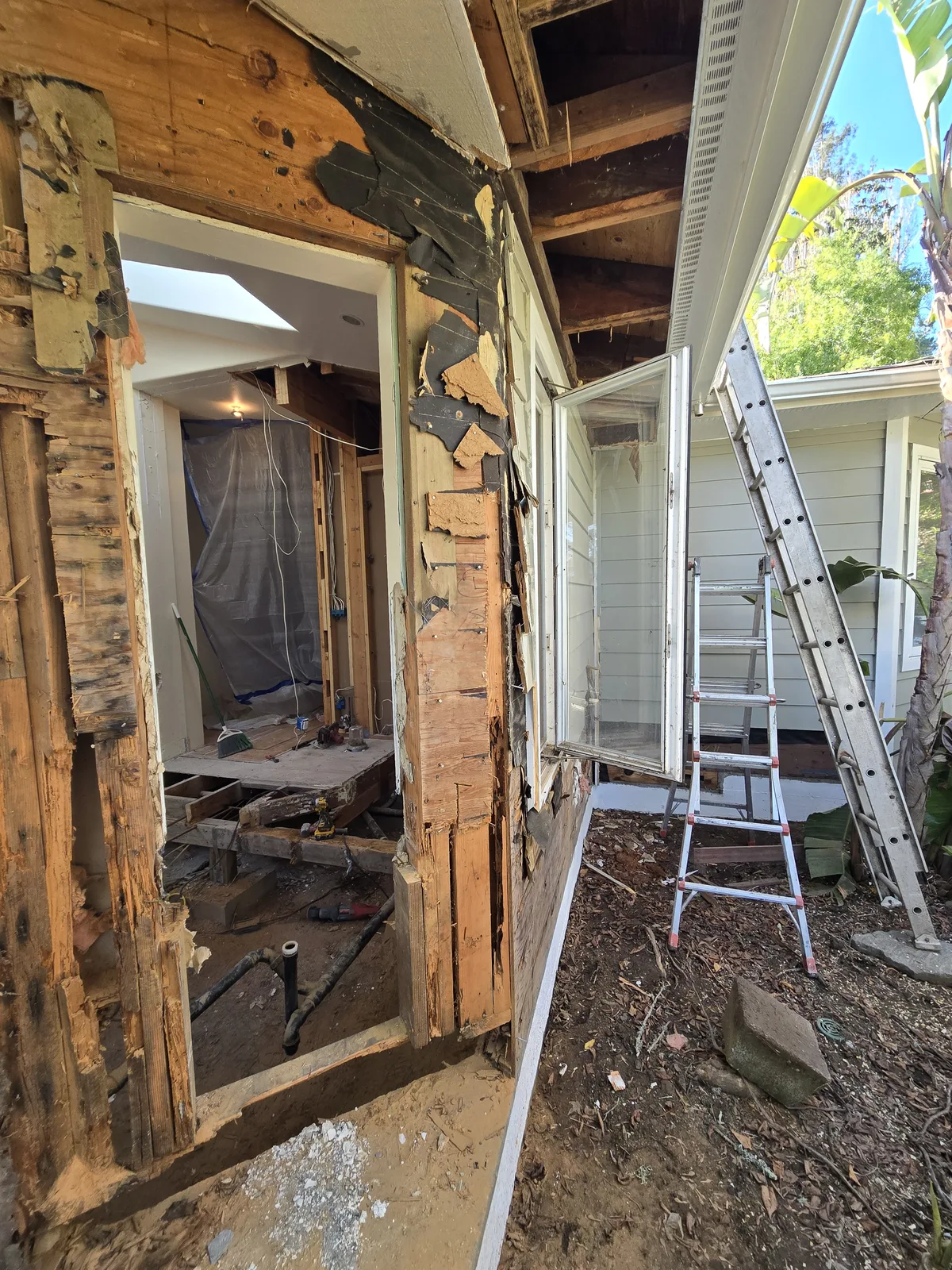
Check Deck Use And Visible Changes
Think about what you have noticed while using the deck this year. Have a railing, stair, or surface component begun moving? Is a repaired spot deteriorating again? Are leaves or stored items preventing you from seeing an area that used to be accessible?
Do not test a questionable deck by bouncing, loading it, or removing boards. If it feels unstable, keep people off the affected area and arrange an assessment. A routine maintenance walk is not a structural evaluation.
For planning questions, read our deck repair versus rebuild guide. It explains why the visible surface and supporting structure need to be considered separately. If a repair is recommended, ask what can be retained and what evidence supports that decision.
Include Indoor Clues Near Exterior Walls
A maintenance review should also include observations inside the home. Look at areas near past window leaks, exterior doors, and known plumbing concerns. A stain, damaged baseboard, or recurring change near an opening is worth recording for the contractor.
Tell the contractor whether the area has been painted or repaired before and whether the symptom returned. The history may help identify what needs investigation, but it does not replace an assessment. Avoid opening walls or removing flooring simply to see whether there is damage.
If you are already planning bathroom remodeling or kitchen remodeling, share these observations during the initial walkthrough. Related repairs can then be considered before new finishes make the area harder to reach.
Sort The List By The Next Action Needed
After the walkthrough, give each item an action rather than a guessed repair diagnosis. A simple approach is:
- Arrange an assessment: visible deterioration, recurring leaks, or a component that may affect safe use.
- Coordinate maintenance: a task such as professional gutter cleaning or an irrigation adjustment, with related damage assessed separately.
- Discuss with planned construction: an opening or finish area that overlaps an upcoming remodel.
- Keep a dated observation: a change you want a professional to review or compare during the next visit.
Do not let a category turn into a reason to ignore an active problem. If conditions change, update the plan. Ask the contractor which findings need attention first and what information is still missing before a repair boundary can be defined.
Turn Observations Into A Contractor Visit
Send a concise list, selected photographs, the property address, and relevant past reports. Include access constraints and whether the home will be occupied during work. Explain if you are requesting a focused repair or want several related concerns reviewed together.
Ask what the first visit can determine and what may require separate investigation. A useful estimate should identify the proposed work, limits, finish responsibilities, and process for concealed findings. Our dry rot repair cost guide can help you prepare those questions.
If multiple trades are involved, agree on the order. Maintenance that changes the exposure, carpentry repairs, and final painting should be coordinated so that one completed task does not have to be undone to reach the next.
Keep A Small Home Maintenance Record
After work is completed, save the scope, photographs, relevant product instructions, and applicable inspection records. Add a brief note about what was repaired and what was retained. You do not need an elaborate system; a clearly labeled folder is enough.
Photograph the same locations later when you notice a change or during another routine review. Comparable images are more useful than repeated close-ups taken from different angles. If a symptom returns, the record gives the next contractor context about the previous work.
Ask about maintenance for the specific materials installed. Coating, cleaning, and inspection recommendations vary by product and assembly. Follow that information instead of assuming every exterior wood repair needs the same treatment on a universal schedule.
Questions About Fall Maintenance And Dry Rot
Can this walkthrough rule out hidden decay?
No. It is a way to organize visible observations and repair history. Concealed conditions may require a professional assessment and, where appropriate, specifically authorized opening work.
Should I paint over every questionable area before rain?
Have deteriorated materials assessed before treating paint as the solution. Surface maintenance and construction repair are different tasks, and covering a concern can make later evaluation harder.
Is every dark stain a dry rot problem?
No. Staining has multiple possible causes. Record the location, timing, and any accompanying changes, then ask for an assessment rather than treating color alone as a diagnosis.
Plan The Next Repair With A Clear Starting Point
A fall checklist is most useful when it leads to an organized next step. Rising Starr Construction can discuss visible wood damage, related repairs, and larger improvement plans for your Windsor or Sonoma County home. Bring your observations and priorities, and work toward a defined scope that addresses the actual condition of the property.